
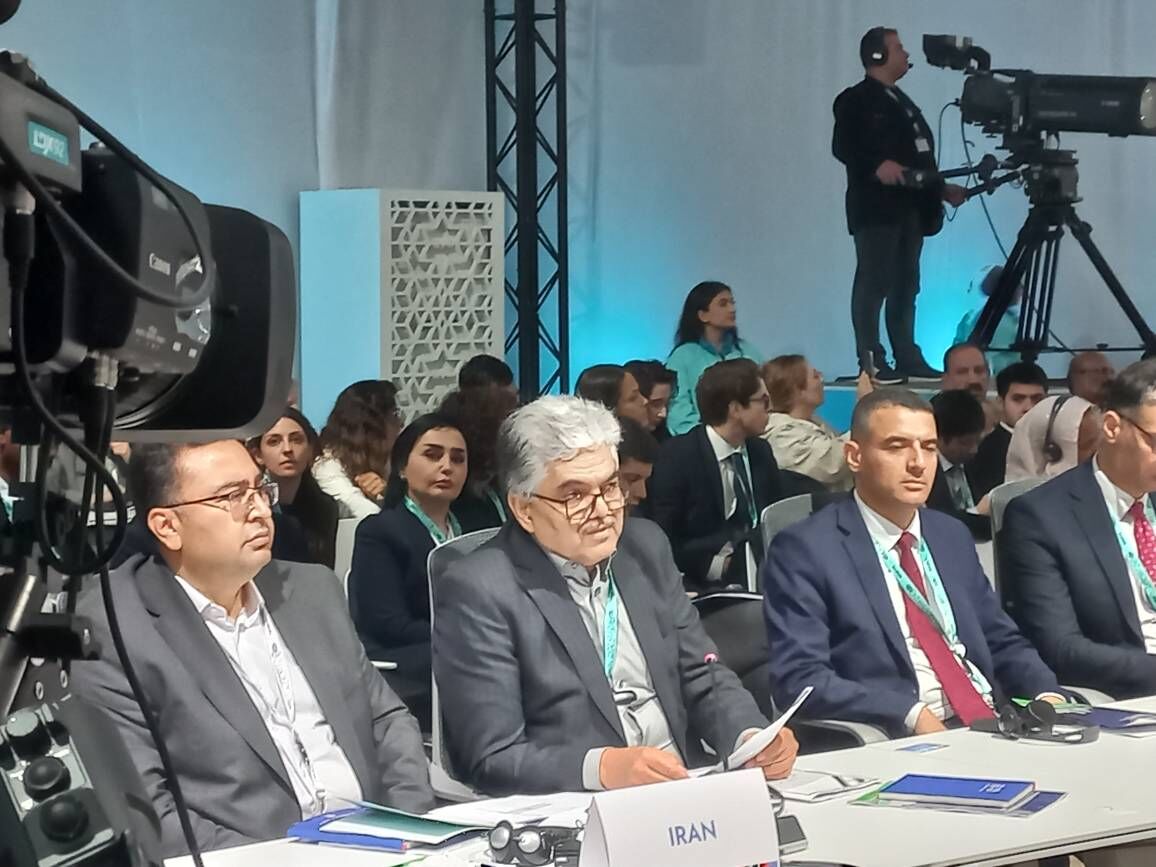
Mrudnews - A delegation from Iran’s Ministry of Roads and Urban Development attended the 13th World Urban Forum (WUF‑13) in Baku, where Deputy Minister Gholamreza Kazemian delivered a message from Roads and Urban Development Minister Farzaneh Sadegh during the ministers’ session
Iranian Delegation at WUF‑13
The 13th World Urban Forum is being held in Baku, the capital of Azerbaijan, from 17 to 21 May 2026 under the theme “Housing the World: Safe and Resilient Cities and Communities.”
The Iranian delegation includes Sadegh Sadeghpour, adviser to the minister and secretary of the National Headquarters for Sustainable Urban Regeneration (Habitat Secretary), Gholamreza Kazemian, Deputy Minister for Urban Planning and Architecture, and Habibollah Taherkhani, Deputy Minister for Housing and Construction.
Minister’s Message Delivered at Ministers’ Meeting
On the first day of the forum, Kazemian read a message from Farzaneh Sadegh, Iran’s Minister of Roads and Urban Development, during the ministers’ meeting of the conference.
In her statement, Sadegh referred to the forum’s theme and questioned how the global community can meaningfully discuss safe and resilient cities while children in some parts of the world continue to face the sound of missiles and bombardment.
She said Iran, a country with a long history of urban civilisation, has faced war twice in the past year and raised concerns about the challenges such conditions create for sustainable urban development.
Iran’s Urban Development Efforts
Sadegh highlighted Iran’s efforts to promote sustainable and humane urban development despite economic sanctions and military pressures.
According to the statement, Iran has pursued large‑scale housing programmes for low‑income and vulnerable groups, while expanding urban infrastructure and reducing multidimensional deprivation.
She also referred to urban regeneration programmes based on community participation, strengthening risk‑management frameworks to address climate change, and the development of renewable energy and smart city initiatives in cooperation with international partners.
Impact of Conflict on Urban Infrastructure
The minister’s message also addressed the consequences of recent conflict for urban infrastructure and housing in Iran.
She stated that more than 150,000 homes were destroyed, leaving many families without shelter. According to the statement, more than 270 schoolchildren, including pupils from Shajareh Tayyebeh primary school in Minab, were killed in strikes.
Sadegh added that key infrastructure, including bridges and major road and rail networks, had sustained significant damage, affecting the resilience and safety of urban systems.
Proposal for Global Urban Reconstruction Fund
In her remarks, Sadegh noted that the New Urban Agenda has reached the midpoint of its 20‑year implementation period and called for a comprehensive mid‑term review to strengthen its delivery.
She proposed establishing a dedicated global fund under the United Nations to support countries affected by crises such as conflict or climate events in rebuilding urban infrastructure.
The minister also suggested incorporating a programme on emergency shelter and long‑term rehabilitation for people displaced by climate hazards and human‑induced disasters within the New Urban Agenda.